
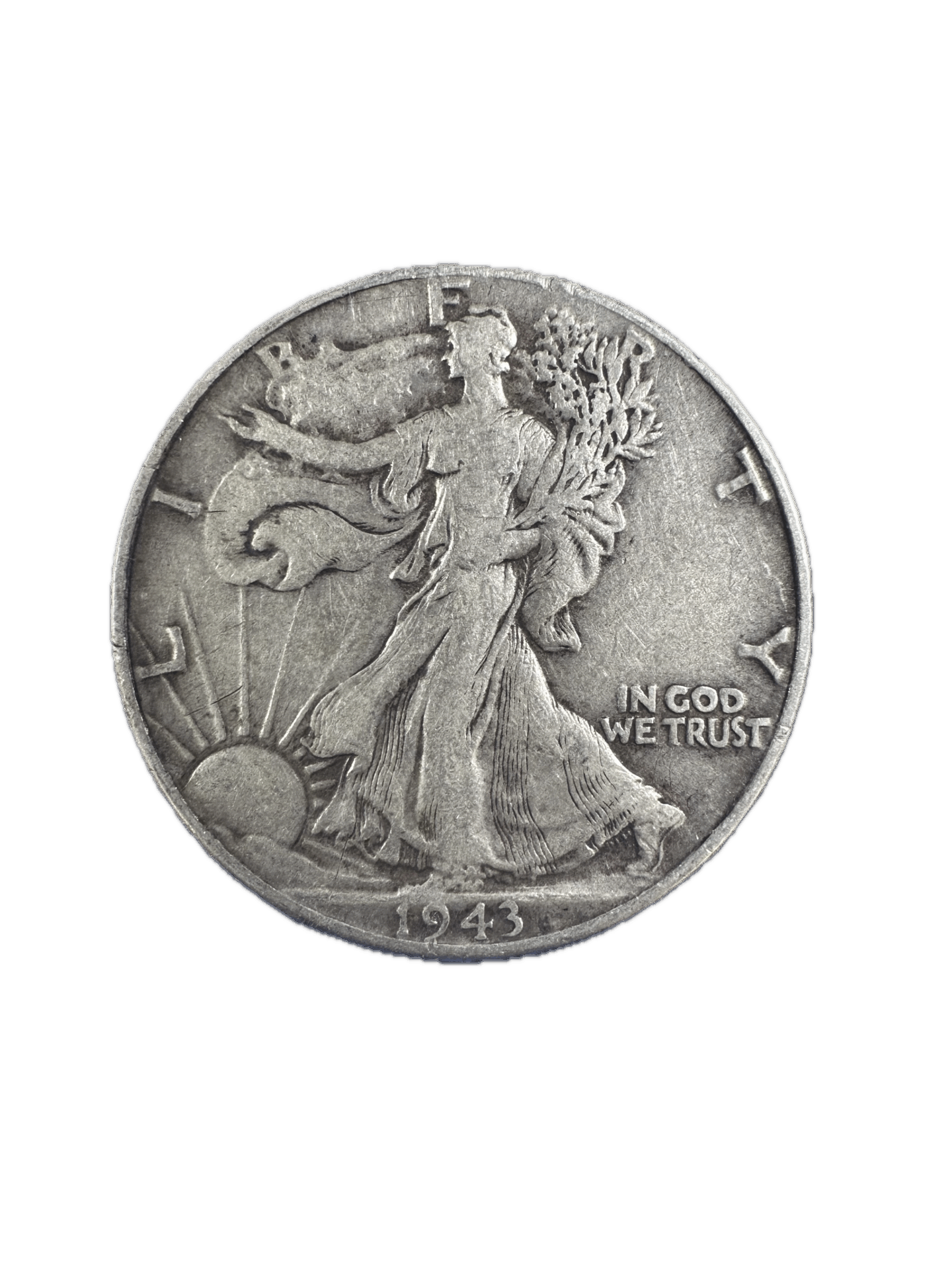
A Dealer’s Guide to Value, Rarity, and Mintmarks
After more than 25 years behind the counter at Curiosity Coins, the question I hear most often from people walking in with an old jar of change or an inherited collection is the same one: “Is this worth anything?”
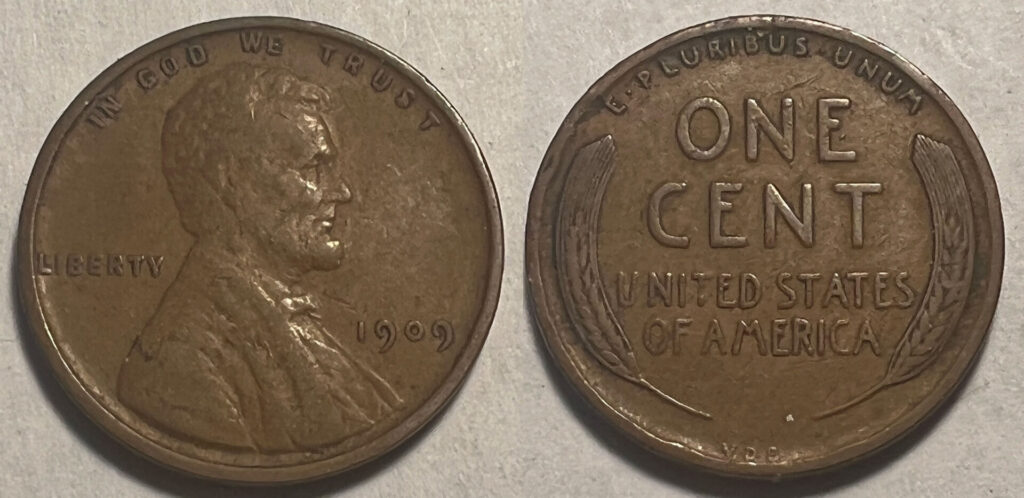
It’s a fair question, and the honest answer is: it depends. A 1909 cent can be worth three cents or three thousand dollars depending on which mint struck it, what condition it’s in, and whether it carries a particular set of initials on the reverse. Understanding what drives coin values is the first step toward knowing what you have — and what to look for.
The Four Pillars of Collectible Value
Most of what makes a coin worth more than its face value comes down to four things working together: rarity, condition, demand, and historical significance.
Rarity is the most obvious. The fewer coins struck of a given date and mint, the more competition there is among collectors to own one. But rarity alone isn’t enough — there has to be a collector base that wants the coin. A scarce token from a defunct trade union may be rarer than a Morgan dollar, but the Morgan has a hundred times the demand, and so it commands a higher price.
Condition is where things get interesting. The coin grading scale runs from Poor-1 to Mint State-70, and the price difference between adjacent grades on a key-date coin can be staggering. A 1916-D Mercury dime in worn condition might bring $1,500. The same coin in Mint State-65 can cross $20,000. Same date, same mint, same design — just a few decades of pocket wear separating them.
Then there’s eye appeal: original surfaces, attractive toning, strong strike. Two coins can grade identically and trade at meaningfully different prices because one simply looks better in hand.
The U.S. Mints — and Why the Mintmark Matters
The United States Mint has operated branch facilities in eight different cities over its history. The small letter on most coins (the mintmark) tells you which one struck it, and that tiny letter often makes all the difference in value.
The Active Mints Today:
- Philadelphia (no mintmark on most coins, “P” on modern issues) — The original mint, established in 1792. Strikes the bulk of circulating coinage.
- Denver (“D”) — Opened in 1906. The other main workhorse for circulating coins.
- San Francisco (“S”) — Opened in 1854 during the Gold Rush. Today it primarily strikes proof sets and commemoratives.
- West Point (“W”) — Began striking coins in 1988. Best known for American Gold and Silver Eagles, plus modern commemoratives.
The Closed Mints — Where The Real Treasures Hide:
- Carson City (“CC”) — Operated 1870–1893 in Nevada to handle the silver flowing out of the Comstock Lode. Carson City coins are some of the most sought-after in all of U.S. numismatics.
- New Orleans (“O”) — Operated 1838–1909, with a Civil War interruption. Struck both silver and gold.
- Charlotte (“C”) — Operated 1838–1861. Gold coins only, made from North Carolina mine output.
- Dahlonega (“D” — same letter as Denver, but the dates make them easy to tell apart, since Dahlonega closed before Denver opened) — Operated 1838–1861. Also gold only, from Georgia mines.
Charlotte and Dahlonega both shut down at the start of the Civil War and never reopened. Their gold coinage was small to begin with, and survival rates are low. A nice $5 Liberty half eagle from either mint can bring $1,500 to well over $10,000, depending on date and grade.
Carson City is the one that really fires up collectors. The 1870-CC Liberty Seated dollar is a six-figure coin in any grade. Carson City Morgan dollars — particularly dates like 1879-CC, 1889-CC, and 1893-CC — routinely bring thousands. Even a common-date “CC” Morgan in a GSA holder is a desirable piece. The same date Morgan struck in Philadelphia might be worth $35; the Carson City version can be $300 to $3,000.
This is why I always tell people: don’t just look at the date. Look at the mintmark.
Error Coins — A Brief Word
Errors and varieties are a whole world unto themselves, and I’ll be writing a dedicated article on this soon. But the short version: when something goes wrong at the mint — a doubled die, an off-center strike, a wrong planchet, a missing element — and the coin escapes into circulation, it can be worth a fortune.
The classic example is the 1955 Doubled Die Lincoln Cent. A misaligned hub during die production caused the obverse lettering and date to appear strongly doubled. About 20,000 to 24,000 of these escaped before the error was caught, mostly in a cigarette vending machine change in the Northeast. Today, even a worn example sells for $1,000 to $2,000, and high-grade red specimens have crossed $25,000 at auction.
There are dozens of major error and variety coins like this — the 1937-D Three-Legged Buffalo Nickel, the 1972 Doubled Die Cent, the 1942/1 Mercury Dime overdate. More on these in a future post.
Coins Worth Their Weight — The Bullion Side
Not every old coin is a numismatic treasure. A huge percentage of what comes across my counter is what we call “junk silver” or “bullion-grade” material — coins that are valued primarily for their precious metal content rather than collector premium.
This includes:
- Pre-1965 U.S. dimes, quarters, and half dollars, which are 90% silver
- 1965–1970 Kennedy halves, which are 40% silver
- Common-date silver dollars in heavily circulated condition
- Modern bullion like American Silver Eagles, Gold Eagles, Krugerrands, Maple Leafs, and generic gold and silver rounds and bars
- Gold jewelry and scrap — 10K, 14K, 18K, dental gold, bent chains, single earrings
These items don’t need to be rare or beautifully preserved to have real value. With silver and gold prices where they are today, a single pre-1965 quarter has several dollars of silver in it, and a $1 face value bag of silver dimes is worth roughly 18 to 20 times its face value as I write this.
If you’ve got a coffee can of old silver change, a broken gold chain, or a stack of Eagles you bought years ago, that material has a clear, transparent market value tied to the daily spot price.
Buying and Selling at Curiosity Coins
Whether you’ve inherited a collection, found a single interesting coin in an old desk drawer, or you’re an active collector looking to add to or trim down your holdings, we’d be glad to help. We’ve been at this since 1999, and we evaluate everything from common silver dimes to rare type coins, error pieces, and gold.
We buy and sell:
- U.S. and world coins
- Currency and paper money
- Gold, silver, and platinum bullion
- Sterling silver flatware and hollowware
- Estate jewelry and scrap gold
- Stamps, militaria, and select collectibles
We’re located at 89 Main Street, Suite 100, Medway, Massachusetts, by appointment only. Send us a message through the website or give us a call to set up a time, and bring whatever you’ve got. Even if it turns out to be common, you’ll leave knowing what it is and what it’s worth — and that’s worth something on its own.