
The Admiral Gardner
The Admiral Gardner was a British East Indianan ship, launched in 1797, named after Admiral
Sir Alan Gardner. The ship was primarily used for trade between Britain and the East Indies,
transporting valuable goods such as spices, textiles, and other commodities.
The Shipwreck
- Date of Wreck: January 25, 1809
- Location: Admiral Gardner was wrecked on the Goodwin Sands, a notorious
sandbank in the English Channel off the coast of Kent, England. - Cause: The ship encountered a severe storm that caused it to run aground on the
sandbank. Despite efforts to save the vessel, it ultimately sank.
The Cargo
- East India Company Coins: Among the cargo were many coins
the British East India Company minted. These coins were intended for use in the company’s
trading operations in India. - Intended Use: The coins were primarily intended to pay soldiers and purchase
goods in India.
Discovery of the Coins - Date of Discovery: The wreck of Admiral Gardner was discovered in 1984.
- Salvage Operation: A salvage operation was conducted to recover the coins and other
artifacts from the wreck. - Condition of Coins: The coins were found in excellent condition, preserved by
the cold, oxygen-poor environment of the seabed.
The Coins
Design and Denominations
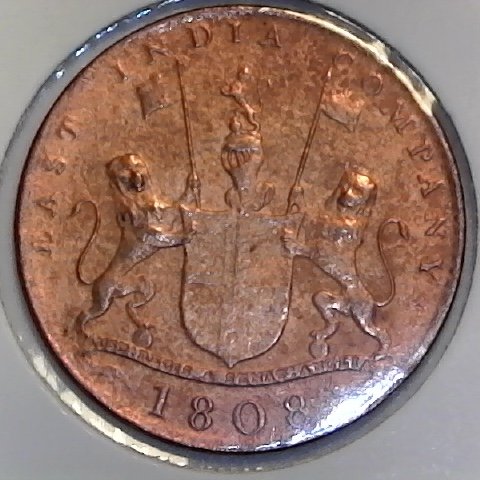
- Denomination: The coins recovered from the wreck are primarily “10 Cash” coins.
Material: These coins are made of copper.
Design:- Obverse: The obverse side of the coin features the East India Company’s emblem, which includes a lion and a unicorn flanking a shield. Above the shield is the inscription “East India Company.”
- Reverse: The reverse side has inscriptions in Persian, the administrative language in many parts of India at the time. The inscriptions include the denomination “10 Cash.”
Minting and Purpose
- Minting Year: The coins were minted in 1808, a year before the shipwreck.
- Purpose: These coins were intended for use in the company’s trading operations in India. They were meant to pay soldiers and purchase goods, facilitating trade in the East Indies.
Collectors’ Market
- Historical Significance: Coins from Admiral Gardner are highly prized by collectors
due to their historical significance and the story of their recovery. - Condition: Many of the coins are in excellent condition, making them even more
desirable to collectors. - Certification: Coins from the wreck are often accompanied by certificates of
authenticity, which add to their value.
Factors Affecting Value
- Provenance: Coins with clear provenance tracing back to the wreck of the Admiral
Gardner is more valuable. - Condition: Coins in better condition, with minimal corrosion or damage, fetch higher
prices. - Rarity: While many coins were recovered, their association with a historical shipwreck
adds a layer of rarity and intrigue.
Collecting Shipwreck Coins
- Investment Potential: Shipwreck coins can be a good investment due to their historical
significance and potential for appreciation in value. - Display and Preservation: Proper storage and display are crucial for preserving the
condition of shipwreck coins. Many collectors use specialized holders and display cases.
Historic Coins
The discovery of Admiral Gardner and its cargo of East India Company coins provides a
fascinating glimpse into maritime history and the trade practices of the early 19th century. These
coins are cherished by collectors not only for their monetary value but also for the rich history
they represent.
Curiosity Coins Has a Limited supply of Admiral Gardner Shipwreck at https://www.amazon.com/s?k=1808&me=A31SL38P4UD6V7&ref=nb_sb_noss
Thank you, and Happy Coin Collecting,
William Halchuk